

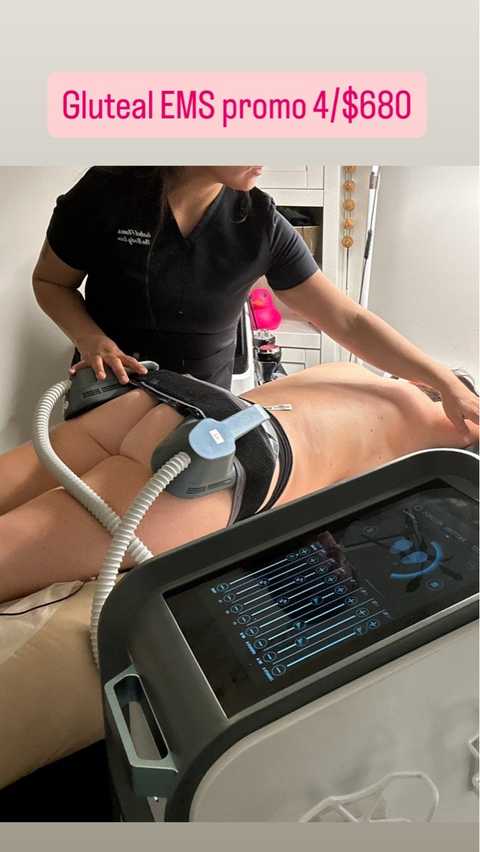
How EMS Muscle Stimulation Works
Abdominal or Gluteal EMS uses controlled electrical pulses to trigger repeated muscle contractions in a targeted area. Those contractions challenge muscle fibers, increasing local muscular activity and circulation without surgery. At The Body Lux in Gilbert the focus is on safe, repeatable stimulation that feels like firm, rhythmic contractions rather than invasive treatment.
The physical changes clients notice depend on how their bodies respond to increased muscular work and improved blood flow. Results are shaped by baseline fitness, lifestyle, and treatment consistency; EMS supports muscle tone and can help reduce local measures when combined with regular activity and a balanced diet, not as a standalone guaranteed solution.
What To Expect During Session
Sessions are non‑invasive and typically comfortable: you rest while pads are placed on the abdominal or gluteal area and the device delivers timed pulses. Most clients describe a strong tingling and contracting sensation that many find relaxing. The appointment is efficient, and the treatment itself is focused and straightforward for busy schedules.
A single treatment at The Body Lux lasts 30 minutes. Because our neighborhood draws commuters, early evening and weekend slots are popular for after‑work visits. There is minimal to no downtime after a session, allowing clients to resume usual activities the same day while monitoring how their muscles respond in the following days.
Planning Your EMS Treatment Course
How many sessions you choose depends on your goals and response to treatment. Some clients begin with a short series and then schedule maintenance visits; others integrate EMS into a broader body‑contouring plan. Staff will review progress and adapt recommendations during follow‑up so your plan matches tangible changes and lifestyle demands.
Many local clients combine EMS with other non‑surgical offerings to address different concerns. We coordinate treatments thoughtfully and consider timing around Gilbert’s climate and schedules — for instance choosing cooler parts of the day in summer — so treatments stay comfortable and convenient for families and commuters.


